Untouched reference
The original ME442 file provides the before-state. It is a reference point rather than a finished forced-induction calibration.
From a virgin ME442 file to a road-developed supercharged calibration: how Project Nemesis evolved through logged data, hardware correction and increasingly fine drivability changes.
Nemesis did not reach its current calibration in one jump. The saved ECU files show a recognisable engineering process: establish a forced-induction baseline, correct the hardware configuration, refine the fuel model using real road data, correct sensor calibration, then concentrate on the increasingly small details of transient response and drivability.
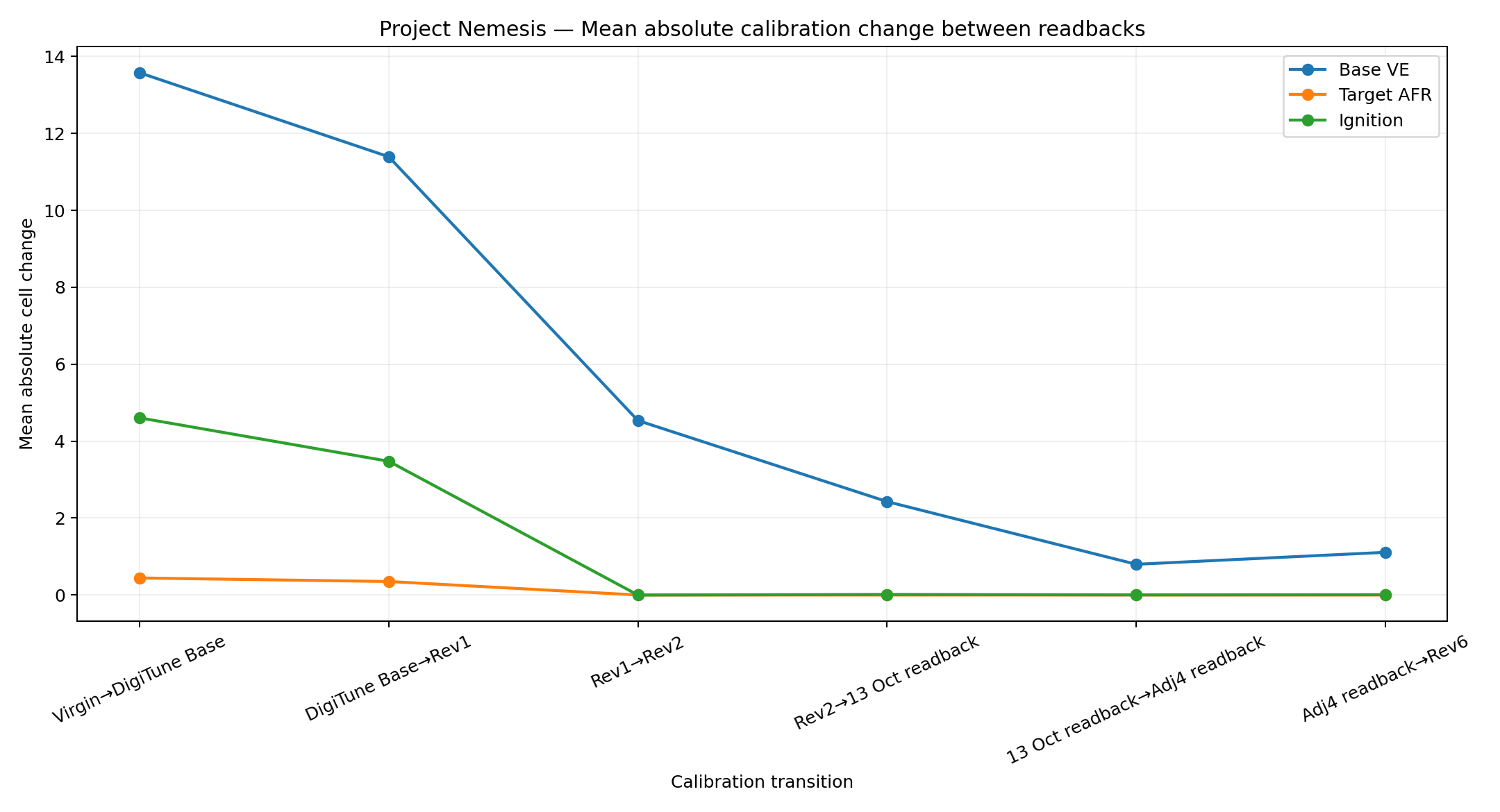
The important point is that mapping is not one table. Base VE, target AFR, ignition, coolant and intake-air compensation, acceleration enrichment, sensor conversion and idle/transition control all interact. The graphs below show how those elements changed as the car itself became better understood.
The original ME442 file provides the before-state. It is a reference point rather than a finished forced-induction calibration.
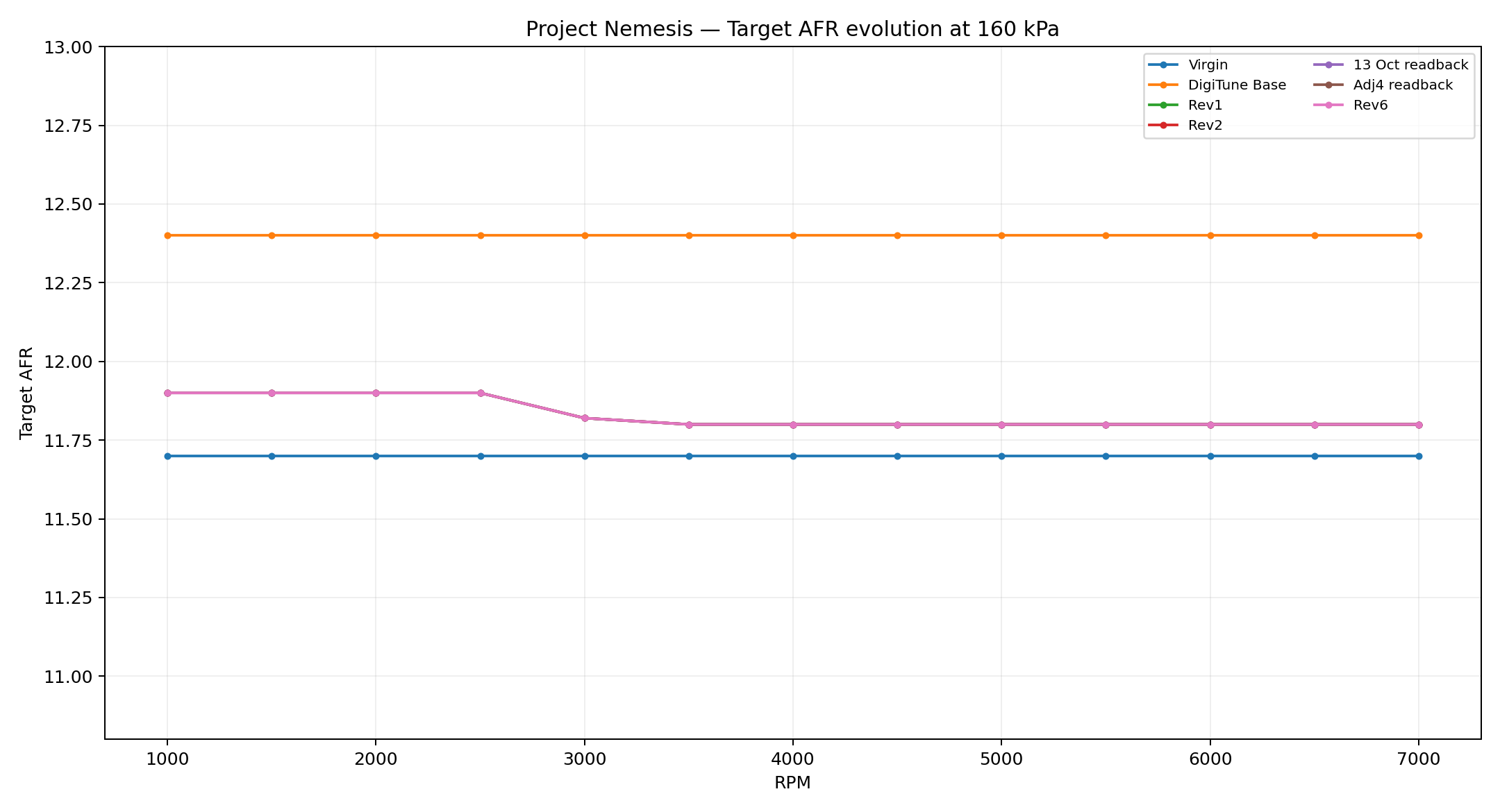
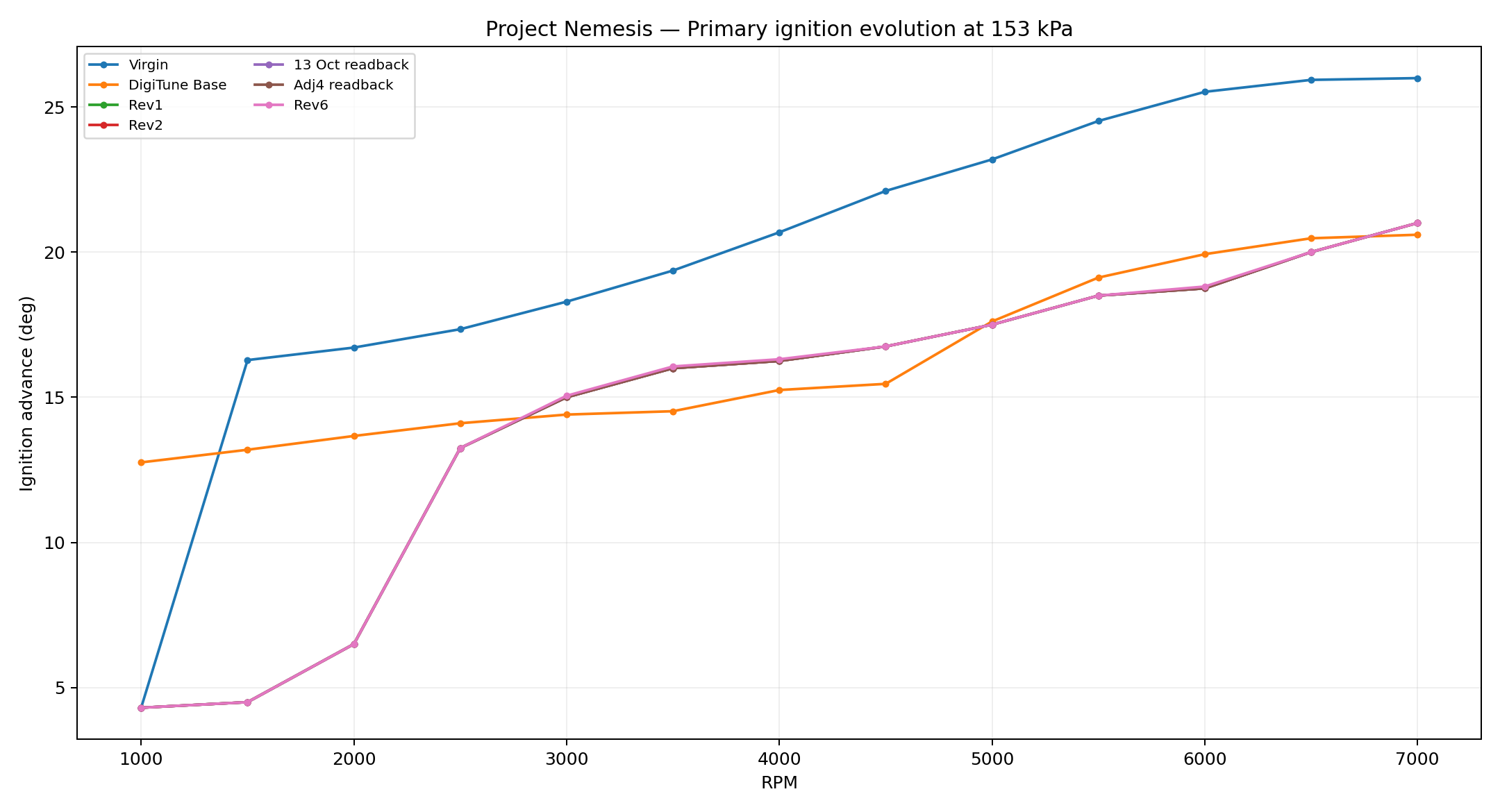
Base VE, AFR targets, ignition, coolant and IAT compensation, acceleration enrichment, injector settings and idle control all move substantially. This establishes the first complete supercharged strategy.
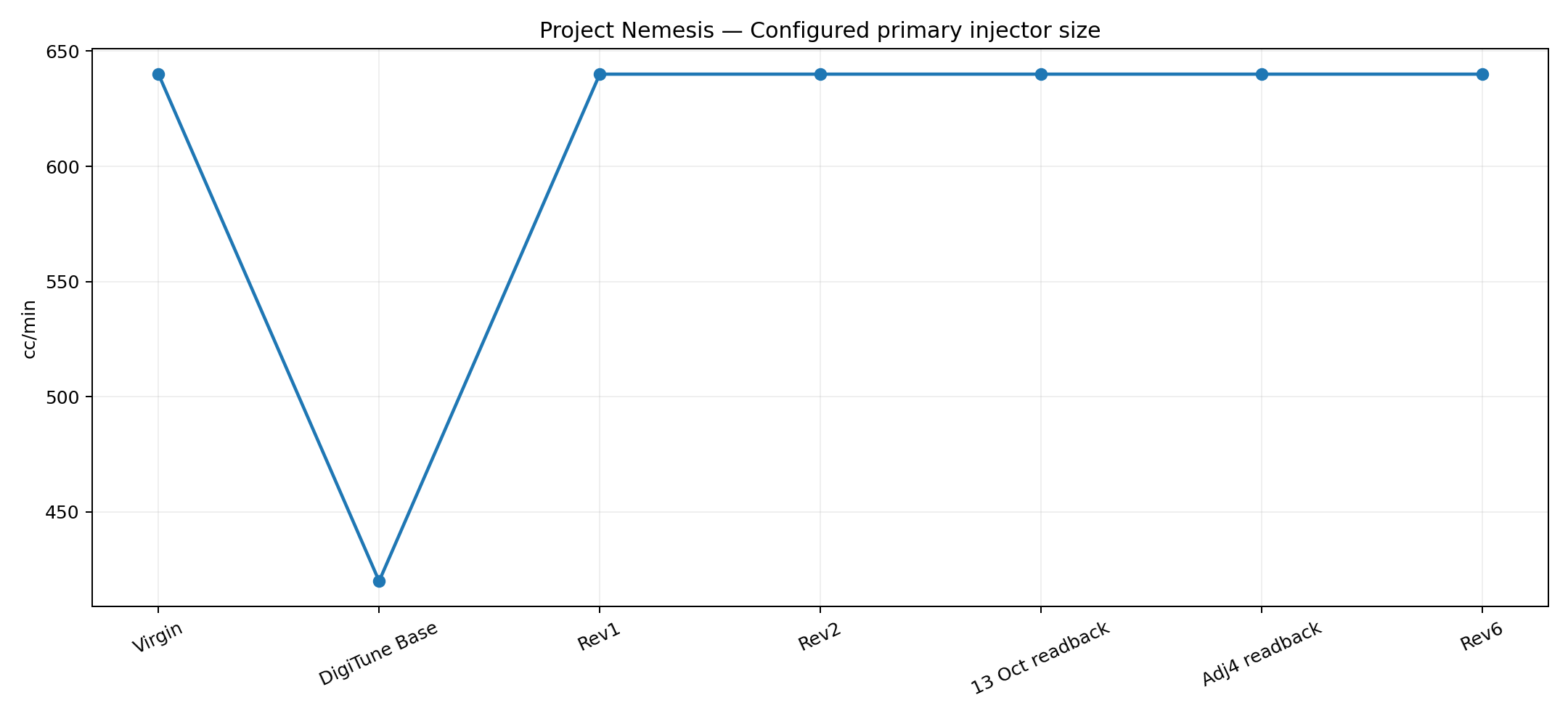
Another major VE rewrite follows. The confirmed injector calibration is restored to 640 cc/min and temperature, enrichment, ignition and idle strategies are substantially reworked.
The character of the changes shifts. The base VE table is extensively corrected while the main AFR, temperature and ignition strategies remain comparatively stable.
VE is refined again, but ignition changes are now small. The calibration is beginning to settle rather than being reinvented.
VE receives another smaller correction, while the IAT sensor HRT curve changes completely to the Bosch-style calibration later confirmed by live readings. Only two primary ignition cells move.
DigiTune proposed reducing acceleration enrichment to soften the remaining gear-change hesitation. Before it was loaded, the missing clutch-switch configuration was identified, so Adjustment 5 was superseded and never flashed to the car.
VE refinement continues, ignition movement is small, exit-idle duty is adjusted and the clutch-switch strategy is incorporated. The accompanying log confirms the clutch input works and narrows the remaining hesitation to the cold transient phase.
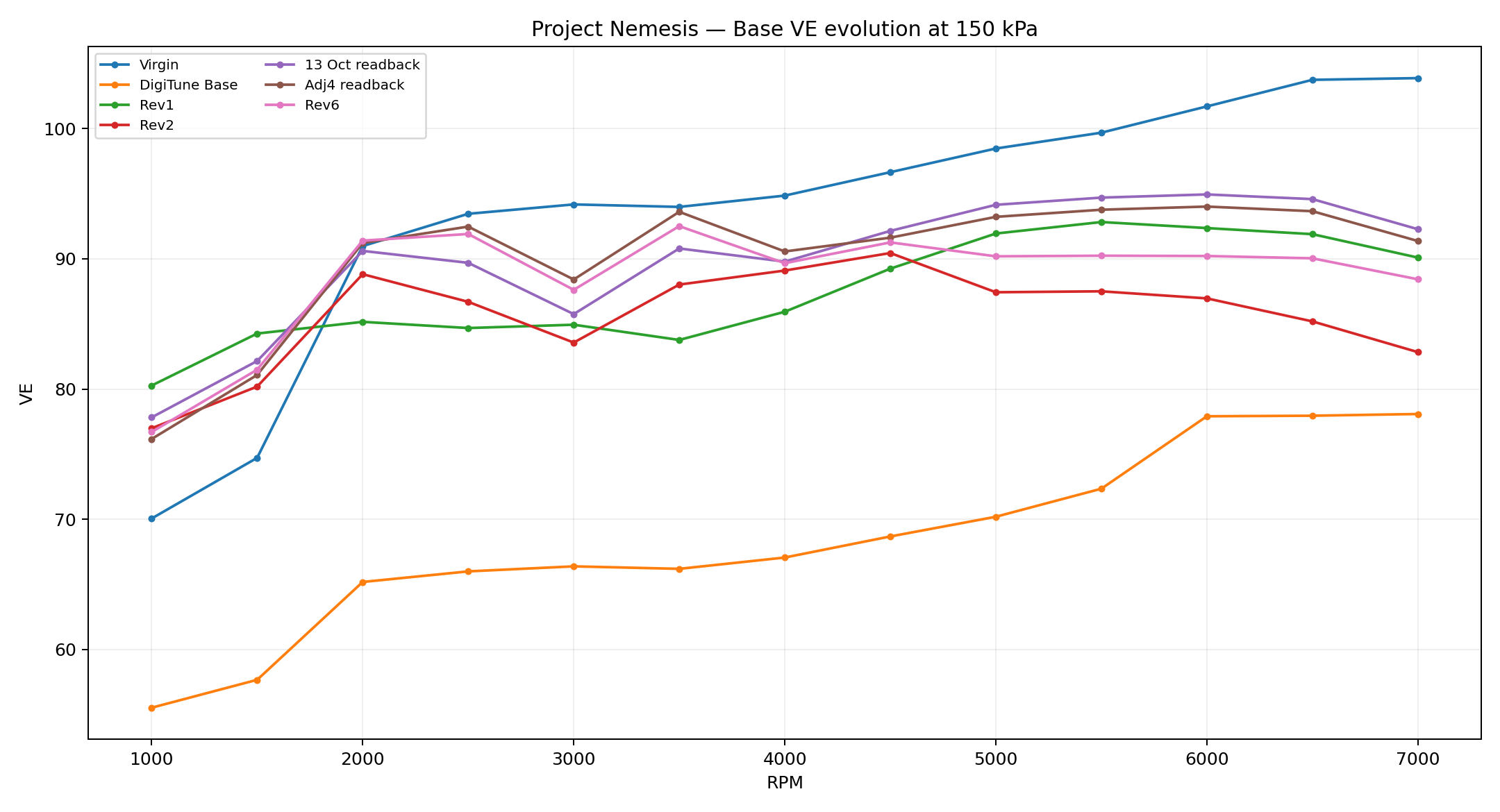
The base VE table is where the largest sustained development took place. Early changes are broad and substantial; later revisions progressively shrink as the road logs pull the model towards the behaviour of the real engine.
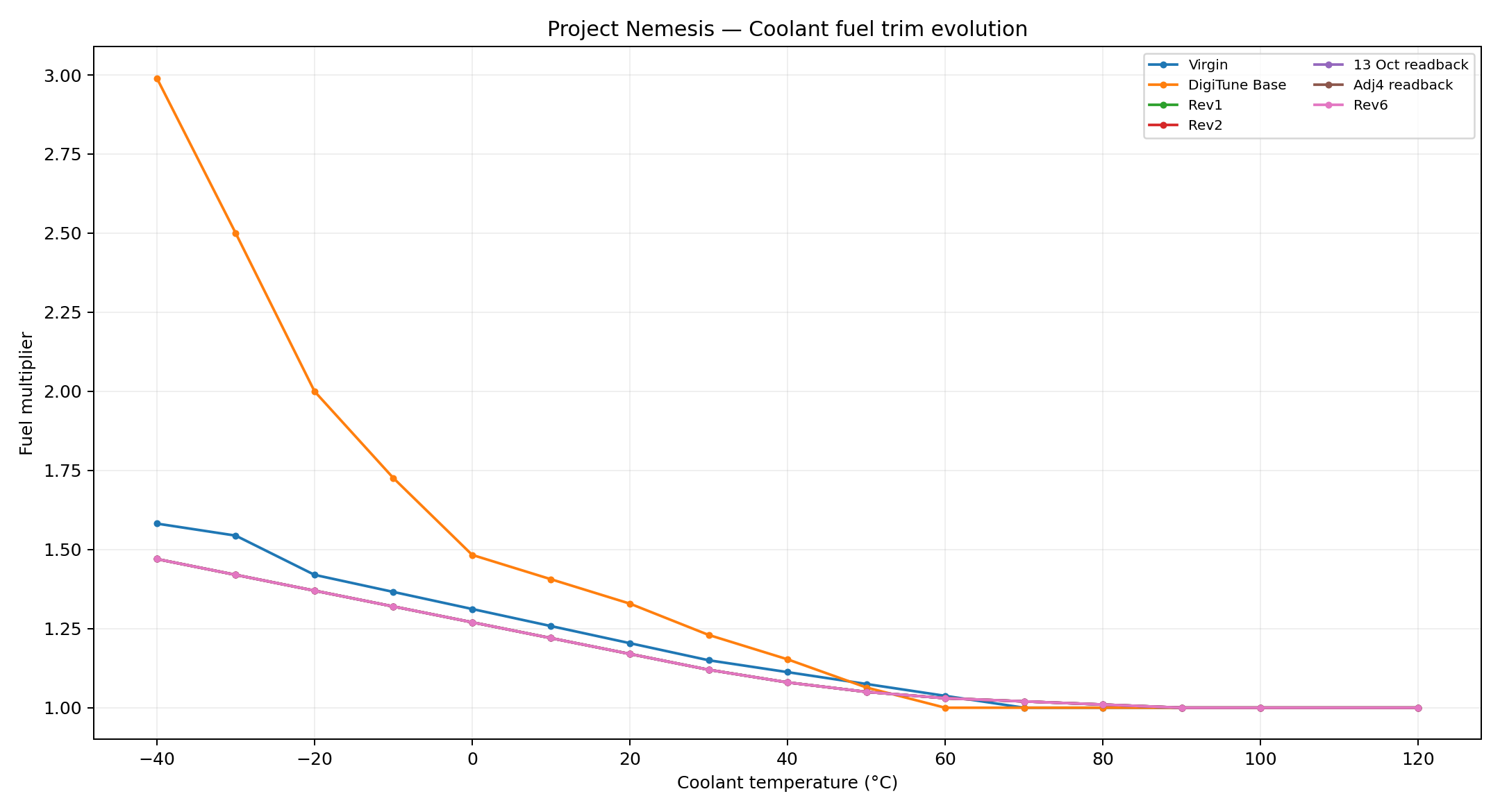
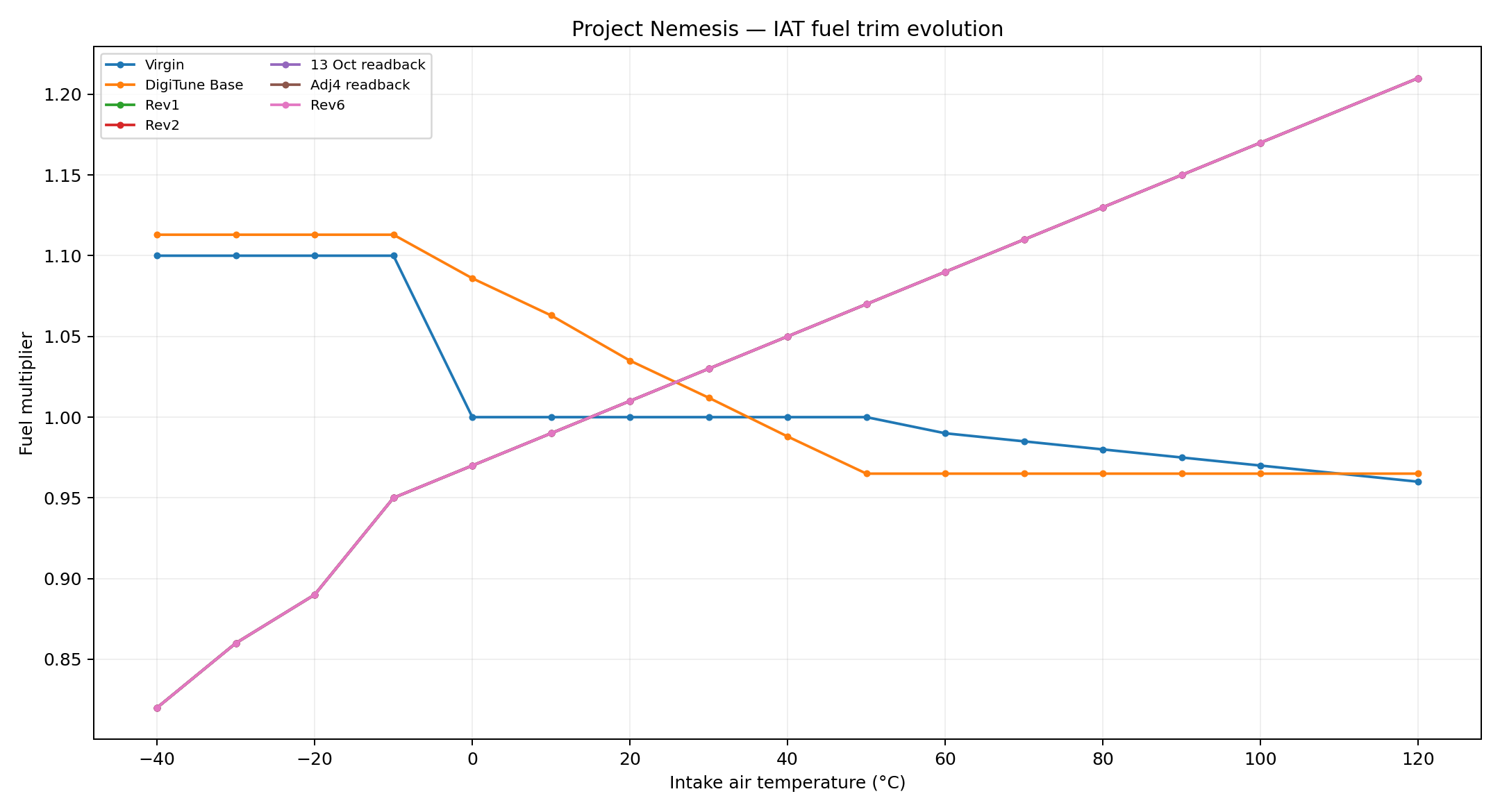
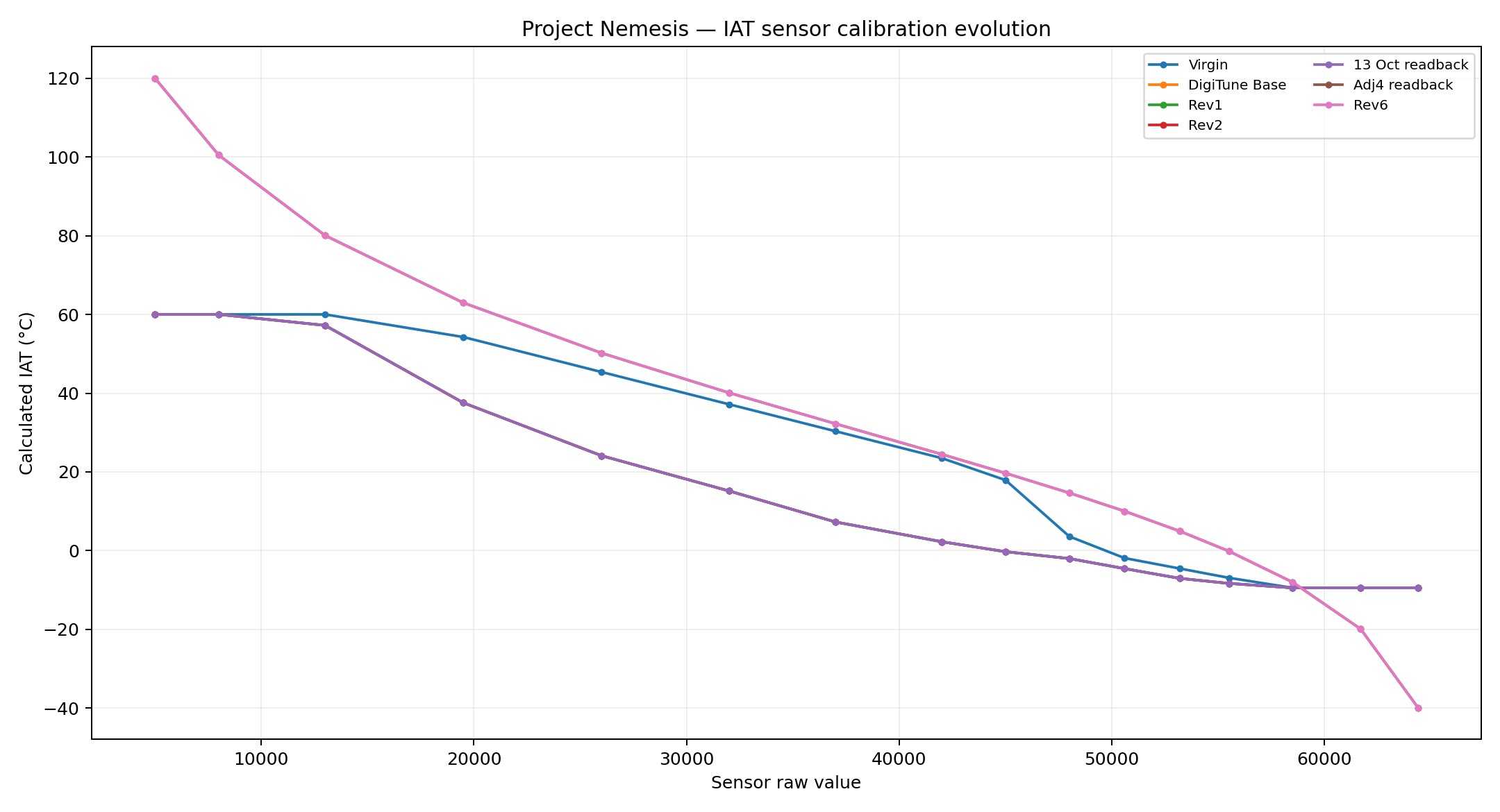
Once full-load fuelling and ignition were healthy, the remaining work moved into transient behaviour: what happens during throttle movement, gear changes, clutch transitions and cold running. These are exactly the areas that can make a technically safe map feel either polished or awkward on the road.
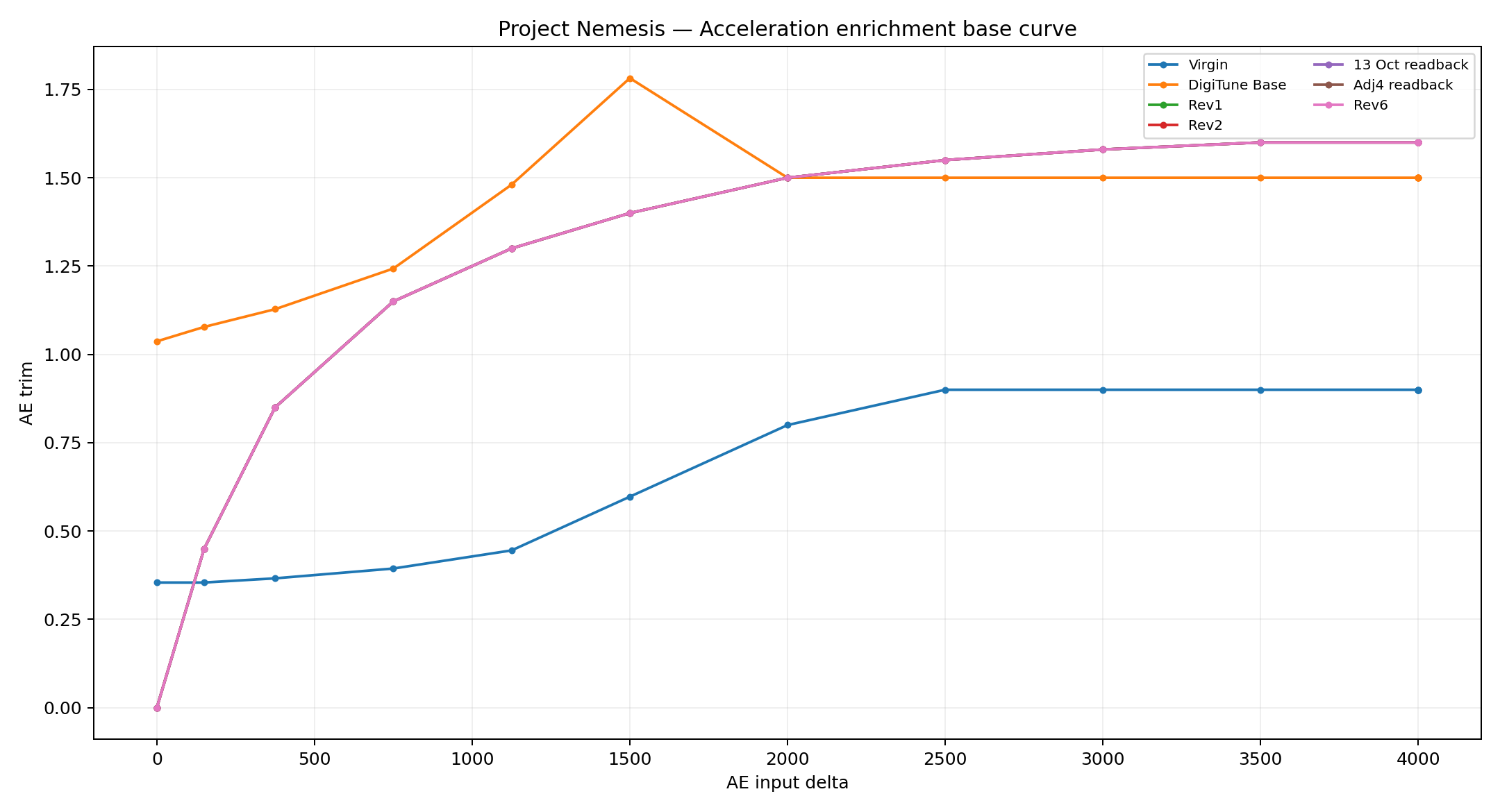
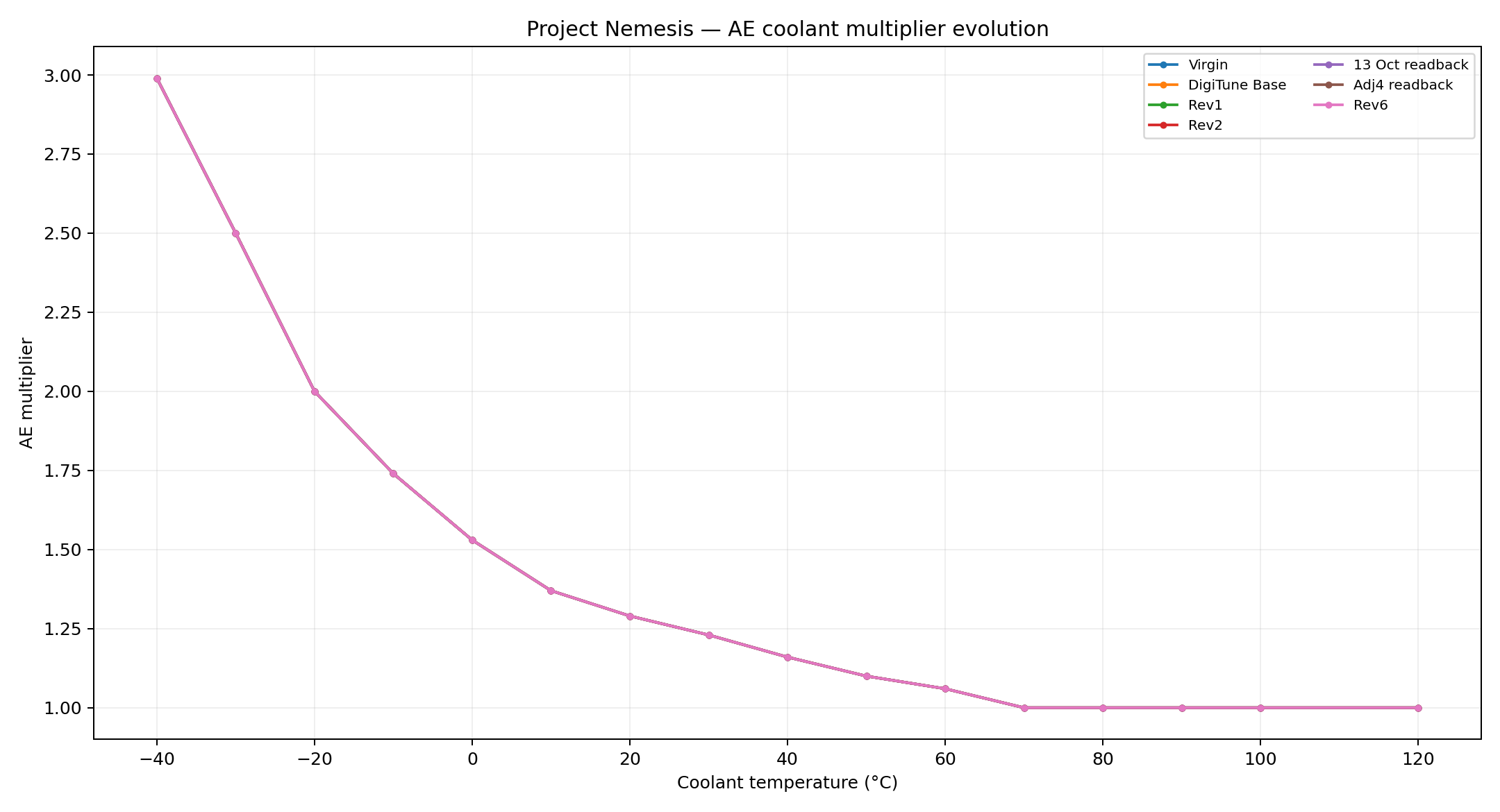
This is where the project has become particularly useful as a learning exercise. The later logs show that the remaining hesitation is not a single mysterious fault: it can be traced through coolant state, clutch input, throttle reapplication, MAP response, AFR movement and the ECU's enrichment strategy.
One of the clearest examples is injector calibration. The configured primary injector size changed during the early revisions before returning to the confirmed 640 cc/min value used by the finished package.
The final calibration is useful. The development history is more useful still. Keeping each revision and its corresponding log makes it possible to understand why the car changed, not merely that it changed — and provides the foundation for future calibration work if Project Nemesis evolves again.